09 Jun 2026

Peloton signals potential move into reformer Pilates with Skōp acquisition
BY Kath Hudson
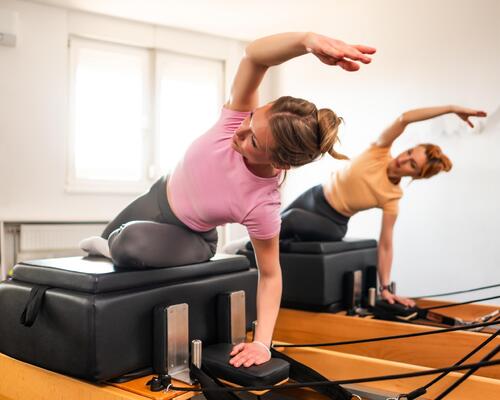
Peloton has made the strategic acquisition of Pilates start-up, Skōp, to support the expansion of its strength ecosystem.
As demand for Pilates continues to accelerate, Peloton says it's enhancing its R&D efforts in the category.
Skōp is an early innovator in connected Pilates, its reformer features built-in digital tracking sensors that measure metrics such as spring resistance tension, movement and weight distribution to give users real-time feedback on their form. The reformer also folds up to a footprint smaller than a treadmill when not in use which is a practical consideration for the home fitness market.
While Peloton has not announced plans to launch hardware, the acquisition of Skōp will fuel speculation that it could eventually enter the equipment segment of the Pilates market with a Peloton Pilates reformer, as it continues to seek new growth engines beyond bikes, treadmills and its other existing categories.
“Pilates is a category ripe for the same kind of experiential reinvention we brought to cardio,” says Peter Stern, Peloton CEO. “Form is everything in Pilates, so we are taking a purposeful approach to ensure we develop the most effective, safest and most fun experiences possible – ones people will keep doing for life. Skōp adds differentiated technology and specialised knowledge to our R&D team so we can continue to empower people to live fit, strong, long and happy.”
Peloton officially launched its mat-based Pilates category on 16 December 2020 with 20 on-demand classes taught by Hannah Corbin, Emma Lovewell, Kristin McGee, Aditi Shah and Sam Yo.
The classes were added to the strength section of the platform and have recently been elevated from a sub-category to be a standalone modality, signalling Peloton's growing commitment to the category.
At its last earning report, Peloton said mat Pilates workouts increased 48 per cent year on year in between January and March 2026 (Q3 FY2026), with this partly driven by Rebecca Kennedy's HiLit programme, which saw 400,000 members engaged during this period alone, out of Peloton's global customer base of 2.66 million Connected Fitness subscribers.
[Peloton currently has 5.8 million 'members', of which 2.66 million are paid Connected Fitness Subscriptions and 522,000 are paid app subscriptions].
Between January and March 2026, the company recorded total revenues of US$631 million, with US$428 million of this being from subscriptions (gross margin 71.1 per cent) and US$203 million from equipment sales (gross margin 11-17 per cent).
Although market scope has not been mentioned, the acquisition could support both consumer and commercial strategies and Peloton's growing commitment to B2B fitness through Precor and Peloton for Business suggests the technology may have applications beyond the home market, particularly in health clubs and hospitality.
Skōp technology could be used by operators for onboarding and assessment, progression tracking, personal training, rehabilitation and premium Pilates programming.
This is a strong direction of travel for the fitness, health and wellness sector, which is increasingly focusing on quantified movement, coaching and outcomes. It also gives Peloton exposure to one of the fastest-growing premium segments of the fitness market, as operators increasingly invest in reformer studios to drive secondary spend and higher-value membership upgrades.
Pilates is one of the few fitness categories currently commanding premium pricing in both boutiques and clubs.
The technology also gives Peloton a route into quantified Pilates, enabling movement quality, progression and performance to be measured in a way that has not traditionally been possible.
Close Window