23 Jun 2026

Expo 2030 Riyadh will create a permanent global destination
BY Liz Terry
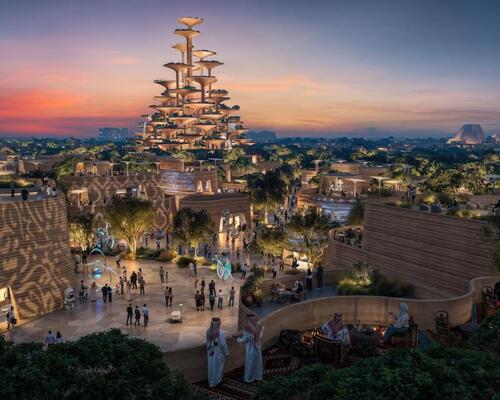
Expo 2030 Riyadh is being planned as a permanent visitor destination, with organisers confirming the six-million-square-metre site will become a Global Village after the event closes.
The World Expo, which will run from 1 October 2030 to 31 March 2031, is expected to attract more than 42 million visits and host 197 participating nations across more than 230 pavilions, making it one of the largest ever staged.
Riyadh's masterplan has been conceived from the outset with a long-term future use in mind. The original concept was developed by LAVA (Laboratory for Visionary Architecture), whose design draws inspiration from traditional Saudi villages, oasis settlements and the landscape of the site at Wadi Al Sulai.
Rather than adopting a conventional exhibition grid, the masterplan is organised as a network of interconnected districts shaped by natural contours, shaded pedestrian routes and restored wadis. LAVA says parametric modelling was used to generate a layout based on the landscape's existing 'cool routes and contours', creating what the practice describes as a 'new model of biourbanism'.
The path around the site will be called the Loop of Nations and will link signature pavilions across the site.
The site 'reads' as a flower from above, with five petals.
The site will be organised around the iconic Kingdom of Saudi Arabia Pavilion, an Expo Convention Center, Expo Stage and the Expo 2030 Riyadh Icon – a new landmark for Riyadh.
There will be three thematic districts focused on prosperity, climate action and the future.
After the Expo, organisers plan to retain key elements of the development as part of a permanent destination incorporating cultural venues, public spaces, visitor attractions and international pavilions.
The organisers say the expo will follow a 'One Nation, One Pavilion' model, giving each participating country its own presence through a combination of self-built pavilions, Expo-built rented pavilions and Partnership Programme pavilions that are constructed and supported by Expo 2030 Riyadh.
The project forms part of Saudi Arabia's Vision 2030 strategy which launched in 2016 to diversify the economy and accelerate investment in tourism, culture, entertainment and quality of life.
Vision 2030 reaches its target year as the Expo opens, positioning the event as both a showcase for the transformation already achieved and a platform from which the Kingdom can signal its ambitions for the decades ahead.
It's likely a follow-up strategy will be published to coincide with the Expo.
If delivered as planned, the legacy district will create a new international destination, adding to Saudi Arabia's growing portfolio of tourism, culture and entertainment assets.
The project has moved to the a delivery phase involving a wider team of consultants, including Buro Happold, which recently signed a major agreement with Expo 2030 Riyadh Company covering masterplanning, infrastructure, mobility, sustainability and legacy planning.
"A vision on this scale requires us to approach the design with sensitivity to both the event itself and the legacy it will leave for the Kingdom and generations to come," said Buro Happold CEO, Oliver Plunkett.
Organisers say more than 6.2 million cubic metres of earthworks have already been completed, 77 per cent of development areas have been handed over for the next phases of work and major infrastructure contracts have been awarded.
With pavilion procurement under way and construction of key buildings expected to begin later this year (2026), Expo 2030 Riyadh is increasingly taking shape not only as a World Expo, but also as a permanent destination designed for the post-Vision 2030 era.
Find out more here.
Close Window