16 Jul 2026

Sky TV research exposes postcode lottery in girls' sport participation
BY Liz Terry
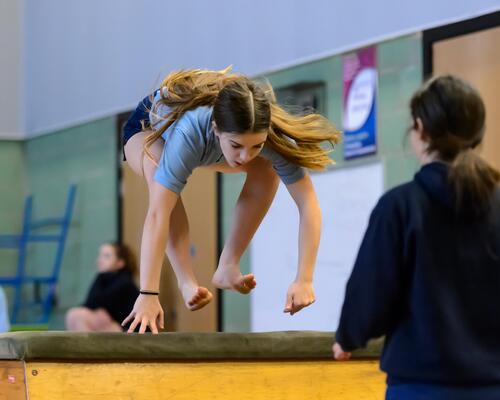
Girls in the UK are missing out on 280 million hours of sport every year compared with boys, according to research commissioned by Sky.
The broadcaster is calling for national action to tackle what it describes as a postcode lottery in sports participation.
The report, Game Changing: How Sport Gives Every Girl a Better Chance, was produced by research consultancy Public First and is the first to map the gender participation gap across all 650 UK parliamentary constituencies.
It found that girls aged 11 to 18 spend an average of 84 fewer minutes taking part in sport each week than boys – equivalent to 280 million fewer hours of activity nationally each year.
However, the analysis shows the gap varies dramatically depending on where girls live. While some constituencies report little difference between boys' and girls' participation, others see girls missing out on more than two-and-a-half hours of sport each week.
The widest gaps are concentrated in the West Midlands and north-east while constituencies in the south-west, north-west and Scotland generally perform better. Birmingham Perry Barr records the largest disparity, while Westmorland and Lonsdale has one of the smallest.
The report says the issue isn't a simple north-south divide, but is heavily influenced by local conditions. Urban areas perform significantly worse than rural communities, with girls in towns and cities participating in almost 100 fewer minutes of sport each week than boys, compared with around 75 minutes in rural areas. Researchers suggest this reflects differences in safety, access to facilities and reliance on organised sport.
Access to facilities also has a major impact. In areas with the poorest sports provision, the participation gap is 46 per cent wider than in the best-served communities. Girls from ethnic minority backgrounds also experience larger disparities than the national average.
Rather than a lack of interest in sport, the research argues that a combination of cultural and structural barriers discourages participation, with lack of belonging a key issue. Many girls feeling that sports clubs and facilities are designed primarily for boys and men.
It also highlights unequal access to pitches, facilities and school teams, concerns about personal safety and harassment, limited visibility of female role models and persistent sexism.
According to the research, more than one in three girls has experienced sexist comments while taking part in sport, rising to more than four in 10 among older teenage girls, while almost one in four has experienced sexual comments. More than half say watching elite female athletes inspires them to take part in sport, underlining the importance of media visibility and representation.
Public First estimates that closing the participation gap could generate around £570 million a year in productivity gains and save the NHS £73 million annually through improved health. By 2035, the cumulative economic and health benefits could reach £6.5 billion.
The findings are being published as part of Sky's Game Changing campaign, which is calling for government, schools, sports organisations and local communities to work together to improve girls' access to sport. The initiative includes partnerships with England footballer Alessia Russo and the charity Goals 4 Girls to encourage greater participation among young women.
For the health and fitness sector, the report reinforces growing evidence that participation is influenced as much by environment as opportunity. It suggests that creating safe, welcoming spaces, increasing the visibility of female coaches and role models, offering beginner-friendly programmes and building supportive communities may be as important as providing facilities in encouraging more women and girls to become active.
Close Window